How to Choose a Rug Size for Every Room
A rug that is too small makes a room feel unfinished. Use these room-by-room rules to choose a size that anchors the furniture instead of floating under it.
Most rooms do not need a bigger rug; they need a correctly placed one. A rug that is too small turns a seating group into a collection of isolated pieces, and a rug that stops short of the dining chairs makes every meal feel unstable. Choosing the right rug size is mostly arithmetic: measure the furniture zone, add the overhang, and check the result against the room. This guide gives the rules for the three rooms where rug size matters most.
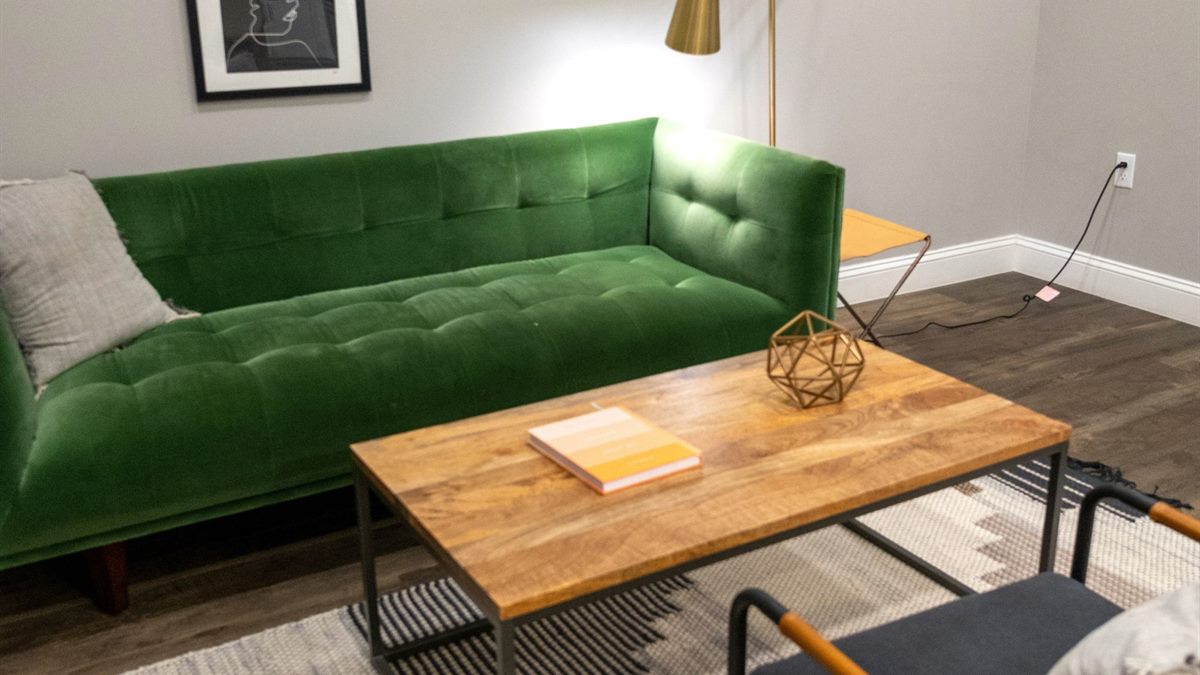
Measure the furniture zone, not the room
Start with the group of furniture the rug is meant to anchor. For a living room, that is the sofa, chairs, and coffee table. For a dining room, it is the table plus the chairs when they are pulled out. For a bedroom, it is the bed and the space you step onto when you get up.
Mark the zone with painter’s tape on the floor and live with it for a day. A tape outline is much cheaper than a rug that is 30 cm too small, and it shows how the size relates to doorways and walkways.
Rug size rules for each room
Stock rug sizes vary by country, but the principles are the same. The rug should reach far enough under the furniture that the pieces read as one group.
- Living room: at least the front legs of every seat should sit on the rug.
- Dining room: extend the rug 18 to 24 inches (45 to 60 cm) beyond the table edge on all sides.
- Bedroom: a rug under the bed should extend about 18 to 24 inches beyond each side.
- Hallway: leave a visible floor border of 4 to 6 inches (10 to 15 cm) beside a runner.
These are minimums. In a large room, a bigger rug will usually look more generous, provided it does not touch the walls.
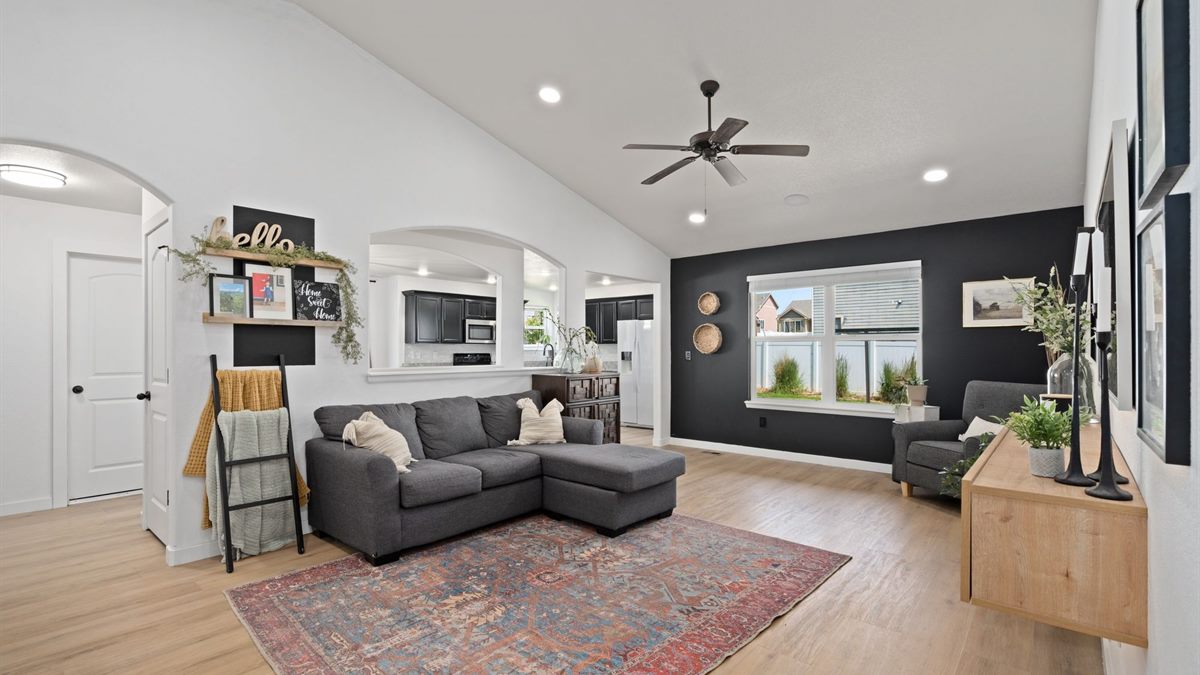
Living room: legs on the rug
For a medium living room, a common choice is 8 by 10 feet (about 240 by 300 cm). A larger room may need 9 by 12 feet (about 275 by 365 cm). The test is simple: if only the coffee table sits on the rug, it is too small. If the front legs of the sofa and chairs are on the rug, the grouping is anchored.
In a very small room, a rug that reaches under the front legs of the seating and leaves a border of floor around the edge can work. Avoid a rug so large that it disappears under every piece of furniture and touches the walls; the room will feel like it is carpeted rather than arranged.
Dining room: chairs on the rug
A dining rug must be large enough that the back legs of the chairs stay on it when someone pushes back to stand. Extend the rug at least 18 inches (45 cm) beyond the table edge, and 24 inches (60 cm) if the chairs are large. For a 72 inch (180 cm) table, that means a rug around 108 inches (275 cm) long before any extra allowance.
Low-pile or flatweave rugs are easier to keep clean under a table, and a rug with a busy pattern hides crumbs between cleanings. A thick pile can make chairs wobble and is harder to vacuum. If the room has a hard floor, a rug also reduces noise and protects the surface under the table.
Bedroom: proportions under the bed
In a bedroom, the rug should feel generous enough that you step onto it when getting out of bed. For a queen or king bed, an 8 by 10 foot rug (about 240 by 300 cm) is often the smallest size that leaves a comfortable border on both sides. Place the bed so that roughly two-thirds of it sits on the rug, with the head end near the wall.
If a large rug is not possible, use two runners on either side of the bed, or a smaller rug at the foot. A small rug placed entirely under the bed and invisible at the sides does little for comfort or appearance. Our bedroom layout guide explains how the bed position affects the rest of the plan.
Runners and small spaces
A hallway runner should be long enough to cover the walking route but leave a border of floor at the sides. A width of 24 to 36 inches (60 to 90 cm) suits most halls; too wide and the rug curls against the skirting. Use a non-slip underlay, especially on wood or tile, and check that the rug does not catch on door swings.
Rugs collect dust and can hold moisture if they are cleaned incorrectly. The EPA indoor air quality guide and the EPA mold guidance explain how to keep soft furnishings dry and ventilated.
Mistakes to avoid
- Buying a rug that only fits under the coffee table.
- Placing a dining rug without room for the chairs to pull out.
- Using a thick rug under a table where chairs need to slide.
- Leaving a narrow strip of rug visible on only one side of the bed.
- Forgetting a non-slip underlay on a hard floor.
- Choosing a light rug in a high-traffic area without checking it can be cleaned.
Once the rug is in place, check the dining table proportions as well. Our dining table size guide covers the clearance a table needs in the same room.
Frequently Asked Questions
What size rug should a living room have?
A common choice is 8 by 10 feet (about 240 by 300 cm), with at least the front legs of the sofa and chairs on the rug. Larger rooms may need 9 by 12 feet.
How far should a dining rug extend beyond the table?
Extend the rug at least 18 inches (45 cm) beyond the table edge on all sides, and 24 inches (60 cm) for large chairs, so the back legs stay on the rug when people stand.
Should a bedroom rug go under the whole bed?
Place roughly two-thirds of the bed on the rug so there is a comfortable border on both sides. A rug that is entirely hidden under the bed does not add comfort or visual anchor.
Do I need a rug pad?
Yes on hard floors. A non-slip pad prevents movement and curling, protects the floor, and makes a thin rug feel more comfortable underfoot.