How to Plan a Bedroom Layout That Feels Calm
A bedroom works when the bed, storage, and walking space stop competing. Here is the order to plan them in, with the measurements that decide comfort.
A good bedroom layout is quiet before it is beautiful. The room has one main job, which is to make sleep easy, and everything else should support that job rather than compete with it. When a bedroom feels cramped or restless, the cause is usually a bed pushed into the wrong wall, storage that blocks a walkway, or a lamp that throws light where it is not wanted. This guide sets out a bedroom layout in a practical order: the bed first, storage second, and decoration last.
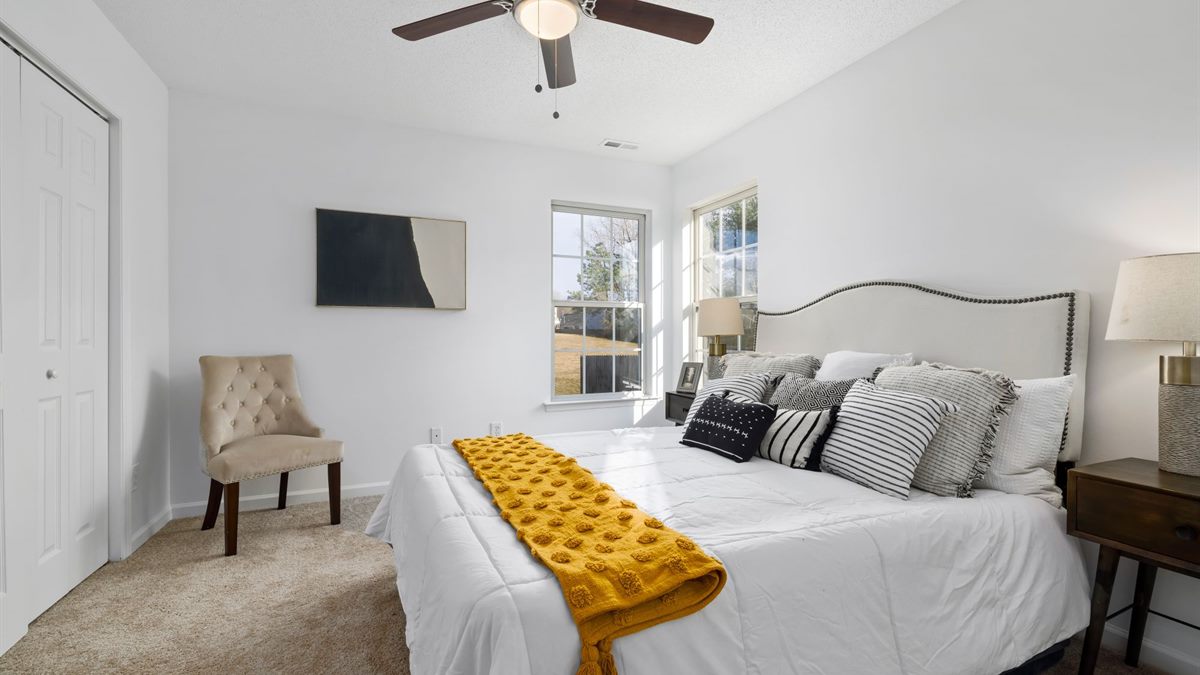
Start with sleep, not style
Before choosing a paint colour or a headboard, list what the room must do on a normal weeknight. Most people need a clear path to the bed, a place to put a phone and a glass of water, somewhere to sit while dressing, and enough storage that clothes do not live on a chair. Those four needs decide the plan more than any trend.
Measure the room with a tape and write down the position of every door, window, radiator, socket, and switch. Note which way the doors open. A door that swings into the only sensible bed wall will remove a metre of usable space, and no arrangement can fix that until you account for it.
The bedroom layout order that works
Place items in this order and the room will usually resolve itself:
- The bed. Choose the longest uninterrupted wall that is not crossed by a door swing.
- Walking routes. Keep the path from the door to the bed and to the wardrobe clear before adding anything else.
- Storage. Put wardrobes and drawers where they do not crowd the bed or darken the window.
- Lighting. Add bedside light and a ceiling or floor source that can be switched independently.
- Decoration. Art, rugs, and cushions come last, when the functional plan already works.
This order matters because it is much cheaper to move a chair than to discover that the wardrobe cannot open.
Bed placement rules that matter
There is no single correct wall for a bed, but there are clear limits. Aim for at least 24 inches (60 cm) of space on each side where possible, and 36 inches (90 cm) at the foot if you dress there. In a small room, one side against a wall is acceptable, but it makes changing sheets harder and disturbs a partner who gets up earlier.
Avoid placing the head of the bed directly under a window if the room is cold or noisy. If the only option is under a window, choose a low headboard and heavy curtains rather than blocking the glass with furniture. Keep the bed away from a door that opens inward, and do not place it so that a walkway passes between the bed and the wardrobe.
If the room is tight, measure the bed frame rather than the mattress. Frames add several inches on each side, and a king frame can be wider than the room allows once bedside tables are included.
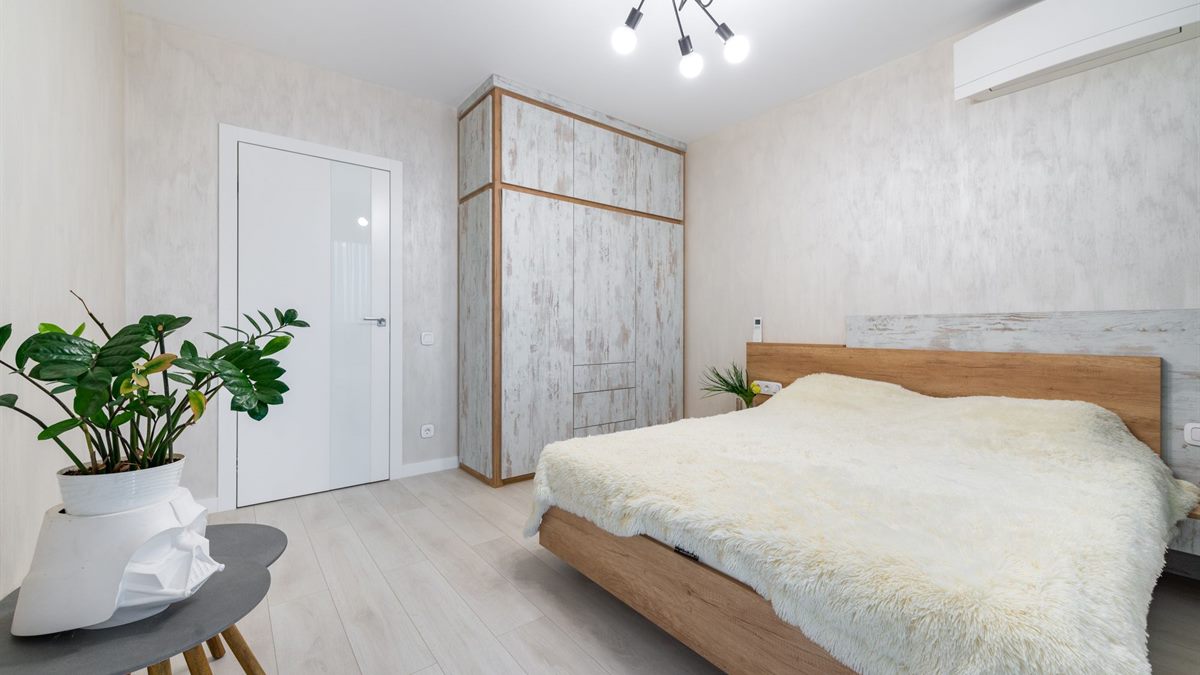
Storage without crowding the room
Storage should be tall rather than deep in a bedroom. A shallow wardrobe that reaches the ceiling stores more than a deep chest that eats floor space. Under-bed drawers are useful, but they need a clear strip of floor to open, so leave room at the foot of the bed.
Choose one bedside table per person, or a slim shelf fixed to the wall if the gap is too narrow. A bench at the foot of the bed can hold a blanket and provide a place to sit, but only if it does not block the main route. Open shelves look calm only when they are edited; otherwise closed doors hide the visual noise that makes a bedroom feel busy.
Our guide to small entryway ideas uses the same principle at the front door: give every object a home, then keep the walking route clear.
Light and air for rest
Light is the most under-planned part of a bedroom layout. Use bedside lamps with warm bulbs, and put them on separate switches if two people share the room. A dimmer on the main light is more useful than a decorative fixture that is either fully on or off. Keep the light source below eye level when sitting in bed so it does not glare.
Ventilation matters too. Beds and bedding collect dust, and a stuffy room is harder to sleep in. Open a window for a few minutes each day where it is safe to do so, and keep the area under the bed clear enough to clean. The EPA guide to indoor air quality explains simple steps for reducing dust and stale air at home.
If the room feels damp or you can see mould on walls or window frames, fix the source before changing the layout. The EPA guide to mould explains how moisture, ventilation, and cleaning interact, and when a small problem needs professional help.
Mistakes to avoid
- Buying a bed before measuring the room, the door, and the delivery route.
- Placing the bed so the first thing you see is a cluttered wardrobe.
- Using only a bright ceiling light with no bedside option.
- Filling the floor with furniture and leaving no space to open drawers.
- Hanging curtains that stop at the sill, which makes the window and the room feel smaller.
A weekend plan
Clear the room as far as you can, mark the door swings on the floor with tape, and place the bed first. Walk the route from the door to the bed and to the wardrobe in the dark; if you would trip, the layout needs another adjustment. Add storage and lighting after that, and only then hang art. A calm bedroom is usually the result of fewer, better-placed pieces rather than a bigger budget. If the plan calls for built-in storage, new wiring, or a window change, our renovation budget planning guide explains how to price the work before you commit.
Frequently Asked Questions
How much space should be on each side of a bed?
Aim for about 24 inches (60 cm) on each side where possible, and 36 inches (90 cm) at the foot if you need a dressing area. In a very small room, one side against a wall can work, but it makes the bed harder to make.
Should a bed go under a window?
It can, but only if the window is well sealed and the curtains do not block the bed. Cold draughts, street noise, and bright morning light are the main reasons to choose another wall first.
What is the best layout for a small bedroom?
Put the bed against the longest wall that is not crossed by a door swing, keep one clear walking route, and use tall shallow storage instead of deep furniture. Avoid filling the floor with extra pieces.
Where should bedside tables go in a tight room?
Use one narrow table per person, or fix a slim shelf to the wall beside the bed. A shelf takes less floor space and still holds a lamp, a book, and a phone.