Small Entryway Ideas That Stop Clutter at the Door
An entryway fails when shoes, bags, and post pile up with nowhere to go. These small entryway ideas give each item a home without stealing the walkway.
The front door is where a home absorbs the outside world: wet shoes, bags, keys, post, and the coat that is never quite in the wardrobe. A small entryway does not need more furniture. It needs a clear sequence of small zones that match what people actually do when they walk in. These small entryway ideas start with the landing zone, then add storage only where it does not narrow the path.
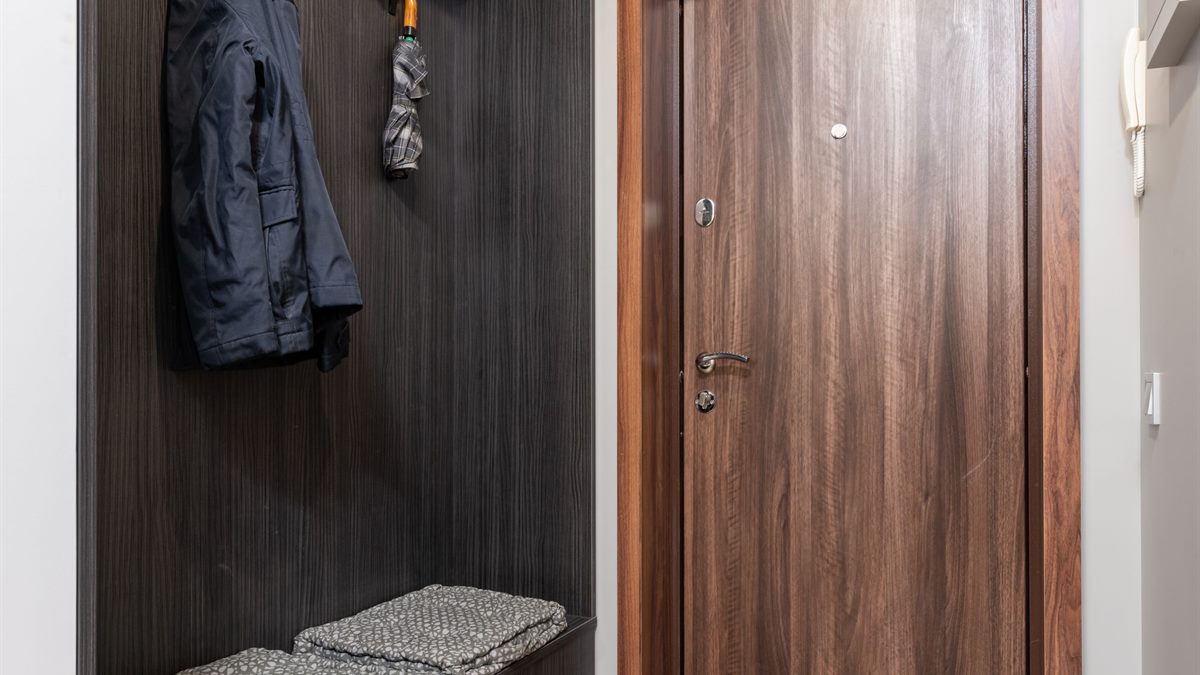
Decide what the entryway must hold
For a week, leave everything where it lands at the door instead of tidying it away. At the end of the week you will have an honest list: shoes, keys, a bag, a umbrella, deliveries, and perhaps a child’s school things. That list is the brief. Storage for objects you never bring through the door is wasted space.
Then separate the list into three groups: things used every day, things used in some seasons, and things that should never live by the door. Coats and boots can move to a wardrobe outside peak season. Post can be sorted in the kitchen. Only the daily group needs to stay within reach.
Measure the walking route before buying anything
The most common mistake in a small hall is a bench or cabinet that leaves too little room to pass. Keep at least 36 inches (90 cm) clear on the main route where you can, and never less than 24 inches (60 cm). Measure the door swing as well: a cabinet placed beside the door can stop it opening fully.
Depth matters more than width. A shoe cabinet at 12 to 14 inches (30 to 35 cm) deep holds most pairs without projecting into the hall. A bench at 14 to 18 inches (35 to 45 cm) deep is comfortable to sit on without becoming an obstacle. If the hall is narrower than that, use wall-mounted hooks and a slim shelf instead of floor furniture.
Small entryway ideas that earn their floor space
- A shallow shoe cabinet. Choose one with adjustable shelves and a top surface for keys and post.
- Wall hooks at two heights. Adults need hooks around 60 to 66 inches (150 to 168 cm); children need a lower rail they can reach.
- A bench with storage underneath. It gives a place to sit and hides gloves, hats, and bags.
- A narrow console with a drawer. The drawer keeps keys and receipts out of sight; the top holds a lamp or a bowl.
- A mirror opposite the door. It borrows light and gives a last check before leaving.
- A boot tray or washable mat. It contains grit and water instead of spreading it through the house.
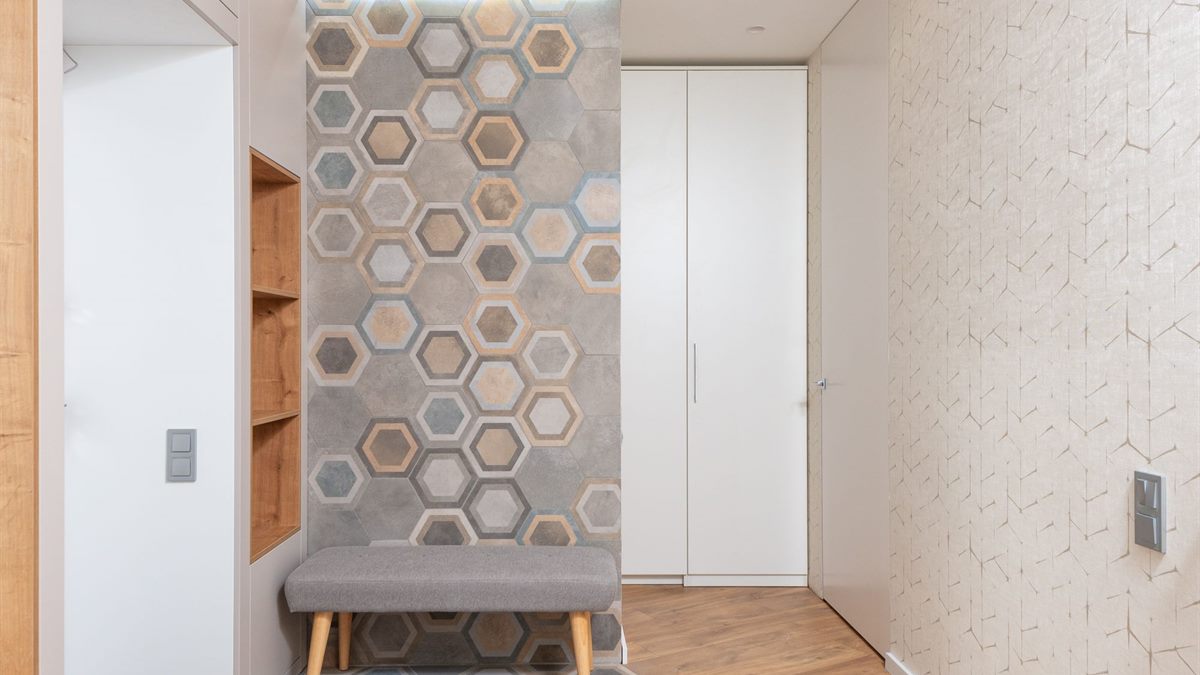
Seating, hooks, and shoes
A bench is worth the space if someone in the house needs to sit to put on shoes. A simple upholstered bench with a lift-up lid is usually more useful than an open shelf, because it hides the mess. If there is no room to sit, a fold-down seat is a reasonable compromise, but check that it does not block the route when open.
Hooks should be fixed into a wall stud or a proper anchor; a row of hooks in plasterboard will pull out under the weight of a winter coat. Use a rail with several hooks rather than individual hooks spaced too far apart. For shoes, keep a small tray for the pairs used this week and move the rest to a wardrobe or under-bed storage.
Light and a place to land
Entryways are often the darkest rooms in a house. A single warm ceiling light helps, but a wall light or a small lamp on the console makes the space feel calmer at night. Aim for a warm white bulb and a switch that is easy to find with a hand full of shopping. If the door has a glass panel, do not cover it completely; daylight is free and makes a narrow hall feel wider.
Draughts around the front door make the hall cold and pull dust inward. A brush strip and new weatherstripping are inexpensive improvements. The Department of Energy Energy Saver resources explain the options, and the EPA indoor air quality guide covers ventilation and dust control.
Keep the rest of the house out of it
An entryway works best when it is a stopping point, not a storage room. Give each daily item one home, and clear the surfaces once a week. If the hall is also the only route to the stairs, keep the floor completely free and use vertical storage. A calm entrance is less about having more cupboards and more about refusing to let the hall become the default place for everything without a home.
If the room beside the door is also used for sleeping, the same rules apply: place the largest piece first and protect the walkway. Our bedroom layout guide explains how to do that. If the door itself sticks or squeaks every time someone comes in, the fix is usually simple; see our guide to fixing a squeaky door.
Mistakes to avoid
- Buying a deep console that leaves less than 24 inches to pass.
- Hanging hooks in plasterboard without anchors.
- Storing out-of-season coats by the door all year.
- Using a dark mat that hides dirt and holds moisture.
- Letting post and keys share the same surface with no drawer or tray.
Frequently Asked Questions
How deep should an entryway bench be?
A bench seat is comfortable at about 14 to 18 inches (35 to 45 cm) deep. Deeper benches take more floor space without adding much comfort, and they can narrow the walking route.
How high should coat hooks be?
For adults, place hooks around 60 to 66 inches (150 to 168 cm) from the floor. Add a lower rail for children, and fix everything into a stud or a suitable anchor.
How much walkway space does a small hallway need?
Aim for 36 inches (90 cm) on the main route where possible, and treat 24 inches (60 cm) as the minimum. Measure the door swing as well as the furniture depth.
What is the best storage for a narrow entryway?
Use shallow wall-mounted storage: a slim shoe cabinet, a shelf with hooks, and a narrow bench. Keep the floor clear and move out-of-season items to another room.