How to Plan a Low-Maintenance Patio
A low-maintenance patio is designed, not just built. Choose the surface, slope, and planting so the space stays usable with minimal cleaning and repair.
A patio becomes high-maintenance for predictable reasons: water sits on the surface, weeds grow between loose stones, the wrong material stains, and furniture is placed where it blocks the route from the house. None of these problems is solved by cleaning harder. They are solved at the planning stage. This guide covers the choices that make a low-maintenance patio possible, from drainage to planting.
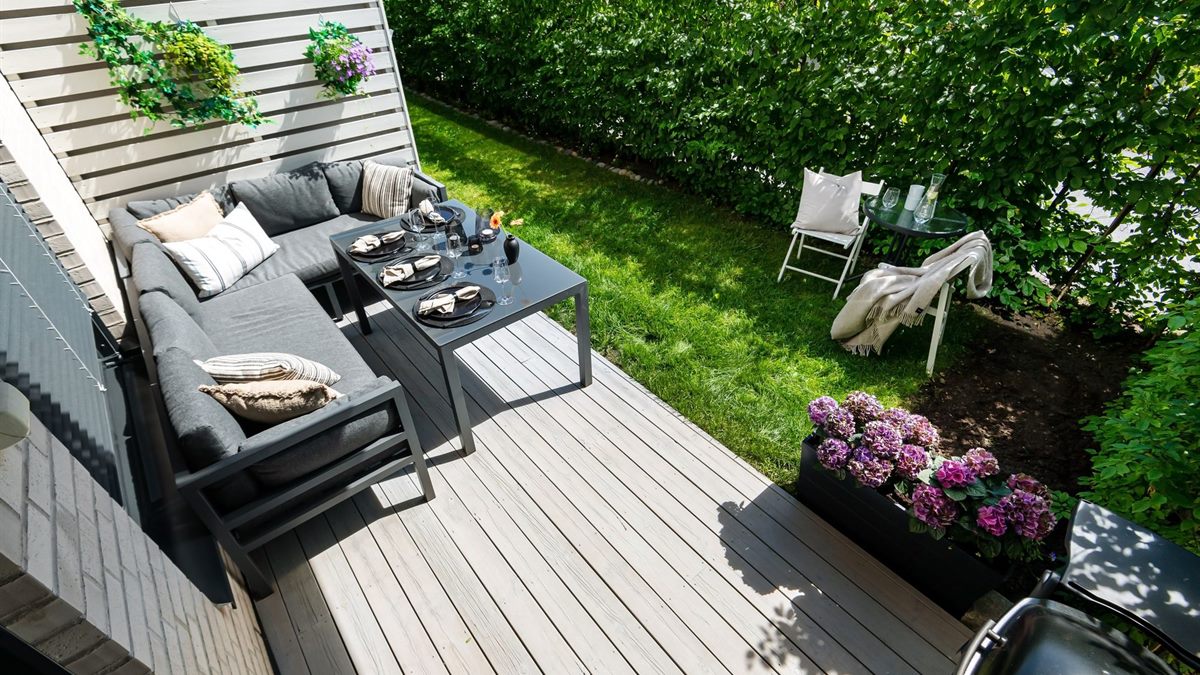
Decide how you will use the patio
Before choosing a material, decide what the patio is for. A dining patio needs a level area for a table and chairs. A lounging patio needs room for furniture and a route to the door. A small courtyard may only need a seat and some planting. The use determines the size, the surface, and how much shade or privacy you need.
Mark the area with string or tape and walk it at different times of day. Note where the sun falls, where the wind comes from, and where the door opens. A patio that is beautiful at noon but unusable in the evening because of wind will not get used.
Choose low-maintenance patio materials
There is no zero-maintenance surface, but some are much easier than others. The right choice depends on climate, budget, and how the patio meets the house.
- Porcelain pavers: dense, stain-resistant, and easy to clean, with consistent colour.
- Concrete pavers: durable and repairable, but joints can grow weeds unless properly filled.
- Natural stone: long-lasting and attractive, but some stones stain and need sealing.
- Permeable paving: lets water through and reduces runoff when designed and installed correctly.
- Decking: comfortable underfoot, but timber needs periodic cleaning and treatment.
- Gravel: inexpensive and permeable, but difficult to keep clean and unstable under chairs.
Avoid surfaces that become slippery when wet, especially near a door or steps. If the patio is shaded, choose a lighter colour that shows less algae and dries faster.
Drainage and slope
Water is the main cause of patio problems. The surface should slope away from the house, typically by about 1 to 2 percent, so water drains rather than pooling against the wall. That is a small fall: roughly 1 to 2 cm per metre. Too little and water sits; too much and the patio feels tilted.
Check where the water will go. A patio that drains onto a neighbour’s land or into the house foundation creates a bigger problem than the one it solves. If the ground is flat or the patio is large, consider a channel drain or a permeable surface. Keep gutters and downpipes clear so heavy rain has somewhere to go.
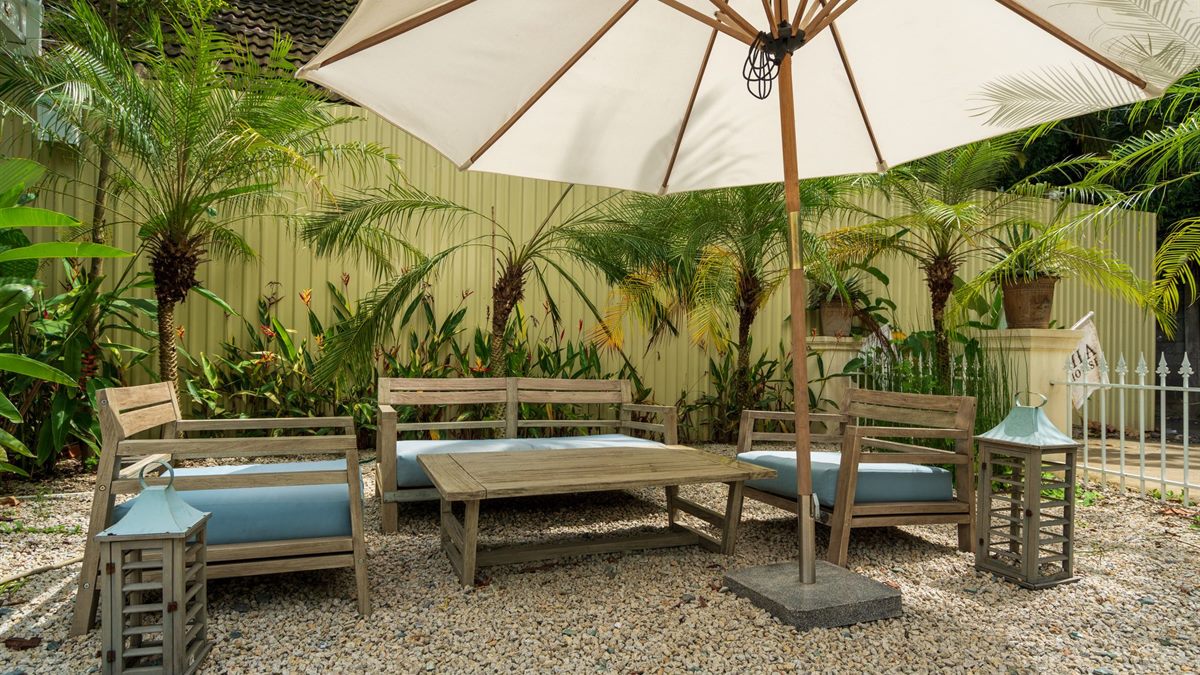
Layout and furniture zones
Leave at least 36 inches (90 cm) of clear space around the main furniture group where people walk, and more on the route from the door. A dining table needs about 36 inches (90 cm) from the table edge to the patio edge for chairs to pull out. If the patio is small, choose a bench or built-in seating against a wall to save space.
Keep the patio edge visible. A change in level, a step, or a raised edge should be easy to see in low light. Add lighting on the route, not just over the table, and choose fixtures that are rated for outdoor use. A patio that is safe to cross at night is used more often.
Planting for less work
Planting can reduce maintenance or add to it. Choose plants that suit the exposure and soil, group them by water need, and use ground cover or mulch to suppress weeds. Keep a clear edge between beds and paving so grass and weeds do not creep into the joints. Avoid plants that drop heavy debris onto the patio or attract pests close to the seating area.
If weeds appear in paving joints, remove them before they seed and refill the joints with the correct sand or aggregate. The EPA safe pest control guidance explains how to handle outdoor pests responsibly. For watering, the EPA WaterSense outdoor guide covers efficient irrigation and planting choices.
Cleaning and seasonal care
Most patio maintenance is prevention. Sweep regularly so dirt does not get ground into the surface, clean spills before they set, and remove fallen leaves before they stain or block drainage. Wash with a suitable cleaner for the material rather than a strong general-purpose product that may damage the finish.
Before winter, clear the drainage route, move fragile furniture under cover, and check the slope after heavy rain. If water stands for more than a day, the drainage needs attention. A small repair now is cheaper than replacing a surface later.
Mistakes to avoid
- Building a patio that slopes toward the house.
- Choosing a smooth surface in a shady, damp area.
- Leaving too little space around the table for chairs.
- Skipping a weed-inhibiting joint fill on pavers.
- Planting right against the patio edge with no maintenance strip.
- Forgetting outdoor lighting on the route from the door.
If the patio connects to a balcony or a small planted area, our small balcony garden ideas cover containers and vertical growing. Our seasonal maintenance checklist helps you prepare the patio and the rest of the exterior before bad weather.
Frequently Asked Questions
What is the best low-maintenance patio surface?
Porcelain pavers are among the easiest to clean and maintain. Concrete pavers are durable and repairable, but the joints need proper filling to limit weeds.
What slope does a patio need?
A fall of about 1 to 2 percent away from the house is typical, roughly 1 to 2 cm per metre. The important thing is that water drains away from the building rather than pooling against it.
How much space should be around a patio table?
Allow about 36 inches (90 cm) from the table edge to the patio edge so chairs can pull out. Keep the main walking route at least 36 inches (90 cm) wide where possible.
How do I stop weeds growing between pavers?
Remove weeds before they seed and refill the joints with the correct kiln-dried sand or aggregate. A permeable joint system and a clean edge between beds and paving also help.