Small Balcony Garden Ideas That Survive Real Weather
A balcony garden has to work with wind, weight limits, and a tap that may be far away. These small balcony garden ideas start with those constraints.
A balcony is a garden with harder rules. It is exposed to more wind than a ground-level yard, its weight capacity is limited, and water usually has to be carried. The small balcony garden ideas that last are the ones that accept those constraints instead of fighting them. Start by reading the space and the building rules, then choose planters and plants that suit the conditions you actually have.
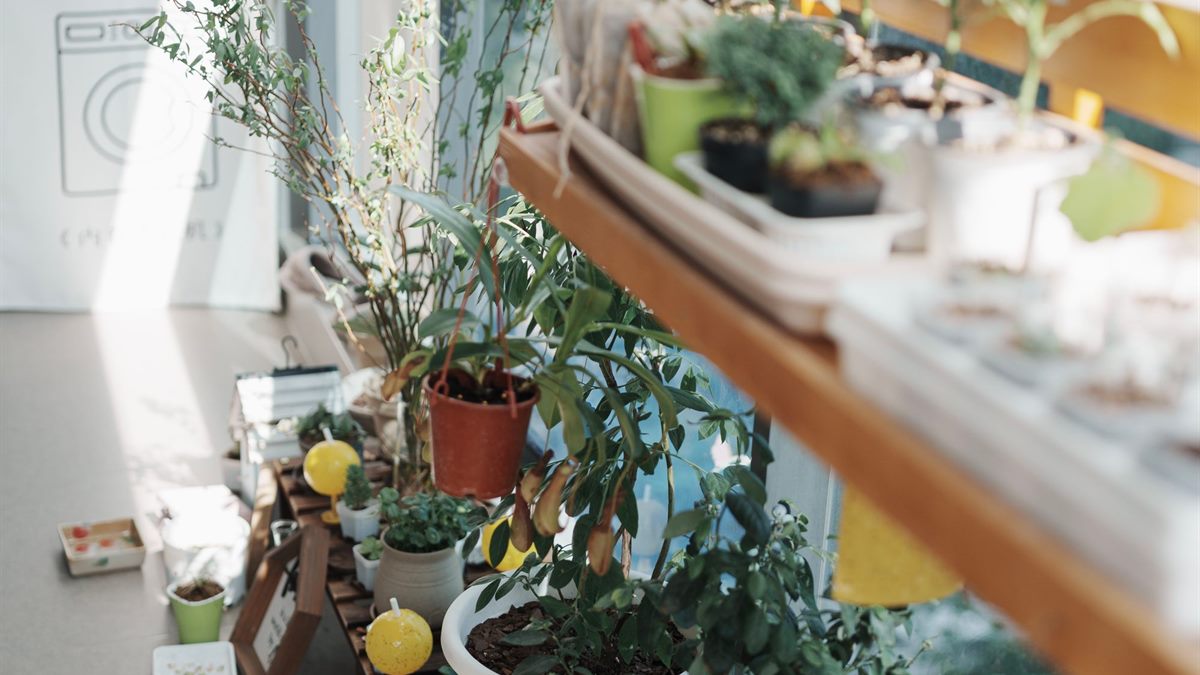
Assess wind, sun, and weight
Watch the balcony at different times of day. Note how many hours of direct sun it receives, where the wind hits hardest, and whether rain reaches the pots. A balcony that faces the weather can dry out in a day, while a sheltered one may stay damp for too long. Both are manageable, but they need different plants and watering.
Check the building rules before adding heavy containers. Some buildings restrict what can be placed on balconies, and weight limits are not something to guess. Keep heavy pots close to the wall or the structural edge rather than at the outer railing, and avoid filling the whole floor with soil. If you are unsure, ask the building manager.
Plan a small balcony garden around wind and weight
Divide the balcony into three zones: a floor zone for larger pots, a railing zone for small planters, and a vertical zone for shelves or hanging baskets. Keep at least one clear route to the door and to any seating. A balcony that is packed edge to edge is difficult to water and unpleasant to use.
Wind is the main killer of balcony plants. Choose low, sturdy pots rather than tall narrow ones, group them so they shelter each other, and avoid tall plants that catch the wind like sails. Fix railing planters securely and check them after storms. Lightweight plastic or fabric pots are easier to move and reduce the load, but they dry out faster than glazed ceramic.
Choose planters that fit the space
- Rectangular troughs along the railing for herbs and small flowers.
- Deep, wide pots for anything that needs stable roots and less frequent watering.
- Self-watering containers for hot, exposed balconies where daily watering is difficult.
- Hanging baskets only where they will not block the walkway or hit a neighbour’s space.
- Saucers and trays to protect the balcony surface and keep water off the walls.
Every pot needs drainage. A decorative pot without a drainage hole will hold water and rot the roots; use it as a cover pot with a plain nursery pot inside. Raise pots slightly on feet so water can escape and air can move underneath.
Grow up, not out
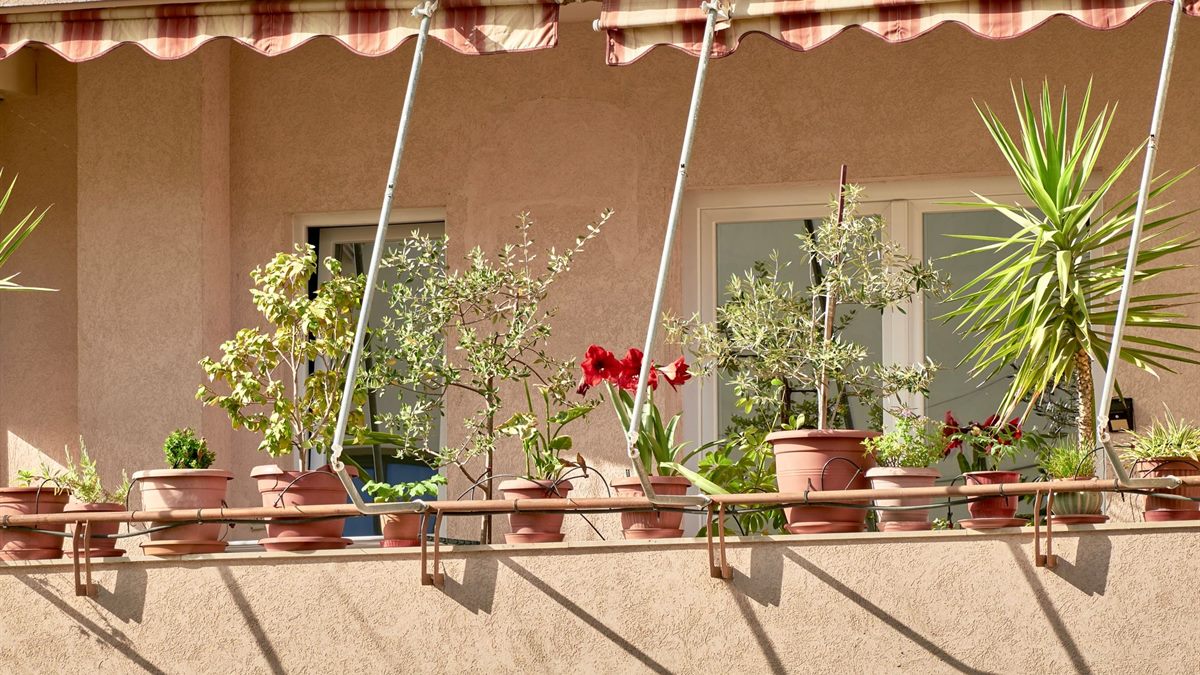
When floor space is limited, use the wall and the railing. A simple trellis, a shelf unit, or a rail of hooks can hold several small pots without taking more floor area. Climbers and trailing plants soften the hard edges of a balcony and can provide shade for plants that dislike strong afternoon sun.
Keep vertical weight in mind: a shelf full of wet pots is heavier than it looks. Fix shelves into the wall or the building structure, not into a thin railing, and distribute weight evenly. Leave space between pots so air can circulate; crowded plants are more prone to pests and disease.
Watering without a tap
Carrying water is the chore that ends most balcony gardens. Make it easier with a few simple habits. Group pots by water need, use larger containers that hold moisture longer, and add a layer of mulch to reduce evaporation. Water in the morning or evening rather than at midday, and water until it runs out of the drainage hole rather than giving a small daily splash.
If the balcony has no tap, a watering can with a long spout and a small reserve container will save trips. Self-watering pots help for short periods, but they are not a substitute for checking plants. The EPA WaterSense outdoor guide has useful advice on efficient watering.
Plants that tolerate exposure
Choose plants that match the light and wind rather than plants you like in photographs. Herbs such as rosemary, thyme, and sage generally cope with sun and wind, while many ferns and large-leaf tropicals prefer shelter and consistent moisture. Succulents suit sunny, dry balconies but still need drainage and protection from prolonged rain.
If pests appear, start with physical controls such as washing leaves, removing affected parts, and improving airflow. The EPA safe pest control guidance explains how to use pesticides responsibly when they are necessary.
Mistakes to avoid
- Overloading the balcony without checking weight limits.
- Using pots with no drainage holes.
- Placing tall, light pots where wind can knock them over.
- Blocking the door or the only walkway with planters.
- Watering little and often instead of deeply and less often.
- Buying plants that need shelter for an exposed, windy balcony.
If the balcony opens onto a ground-level outdoor area, the same principles scale up. Our low-maintenance patio guide covers surfaces and furniture zones, and our seasonal maintenance checklist helps you prepare the space before winter.
Frequently Asked Questions
What can I grow on a small balcony?
Herbs, compact flowers, succulents, and small leafy plants are good starting points. Choose varieties that match the balcony’s sun and wind rather than plants that need shelter.
How do I stop pots blowing over on a balcony?
Use wide, low pots, group them together, keep heavy pots near the wall, and avoid tall lightweight containers. Fix railing planters securely and check them after windy weather.
How often should I water balcony plants?
It depends on sun, wind, pot size, and the plant. Check the soil with your finger and water deeply when the top layer is dry. Morning or evening watering loses less to evaporation.
Do balcony plants need drainage?
Yes. Every pot needs drainage holes, and saucers or trays protect the balcony surface. A pot without drainage will hold water and can rot the roots.